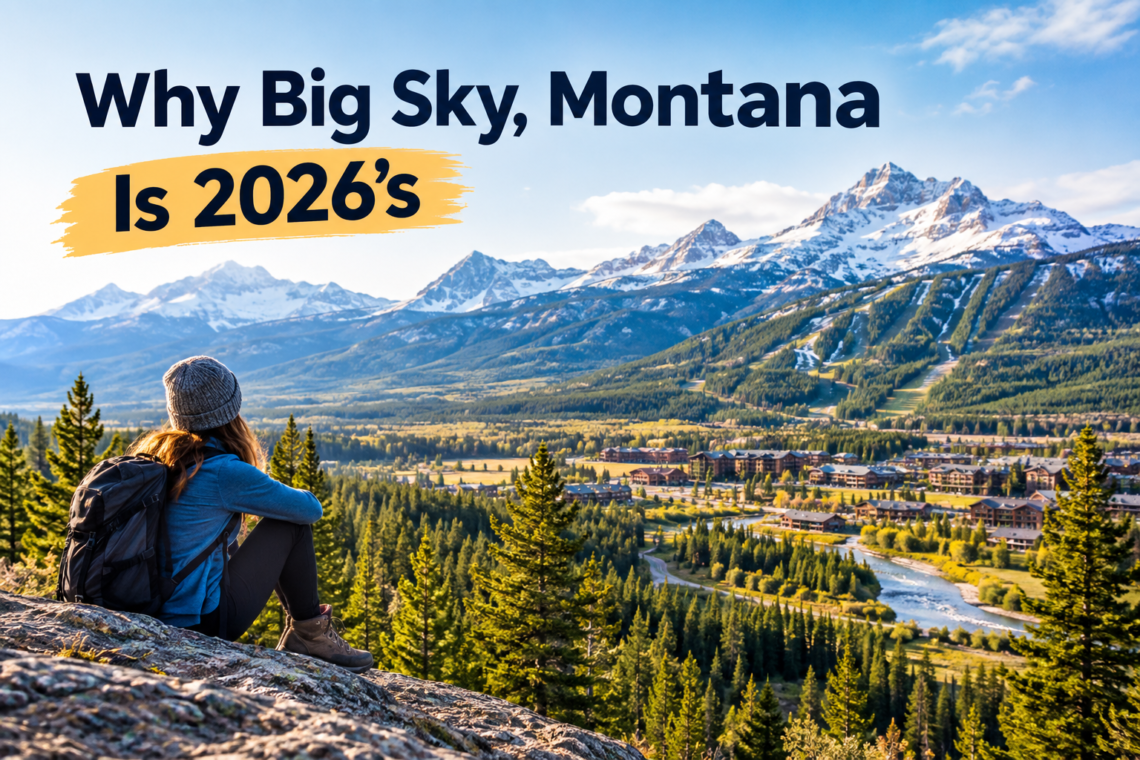
If you’ve been scrolling travel content lately, you’ve probably noticed one name popping up again and again: Big Sky, Montana. It’s not a coincidence. Big Sky has claimed the top spot as Expedia’s No. 1 travel destination for 2026, with searches for flights and lodging jumping a whopping 92% this year. That kind of jump doesn’t happen by accident, and if you’re the type of traveler who likes to get somewhere before it’s everywhere, this is your window.
Here’s everything you need to know about why Big Sky is blowing up right now, and how to plan a trip there before the secret is completely out.
Why Everyone’s Suddenly Talking About Big Sky
Part of the appeal comes from unexpected places — including television. A hit TV series sparked a surge of travel to the Montana region a few years ago, a trend Expedia has referred to as “set-jetting,” where travelers pick destinations they’ve seen on screen. Watching the sweeping mountain vistas and ranch life on TV apparently made a lot of people want to see it in person.
But it’s not just pop culture doing the work. Big Sky has also expanded in very real, tangible ways — new flight routes into the region, expanded tram access, and a new luxury resort that opened in late 2025. In other words, it’s become genuinely easier — and more comfortable — to visit than it was even two or three years ago.
What’s interesting is what this says about where American travelers’ heads are at in 2026. Big Sky’s top ranking is notable because it’s not a big city or a classic coastal hotspot — it reflects a broader shift toward outdoor adventure, fresh air, and under-the-radar destinations. People are tired of fighting crowds in the same five cities. They want space, mountain air, and a slower pace — and Big Sky delivers all three.
What Makes Big Sky Worth the Trip
Mountains built for adventure, in every season.
Big Sky sits right in the heart of the Rockies, and the numbers speak for themselves: the resort has 4,350 vertical feet and more than 250 runs for skiing, and in the summer months it shifts to mountain biking, ziplining, and hiking. Most destinations are a “one season” trip. Big Sky genuinely isn’t — winter draws the skiers, summer draws the hikers and bikers, and fall is quickly becoming a favorite for a very specific reason.
Fall is the sleeper season.
If you want the views without the crowds, September and October are the sweet spot. Fall brings a much quieter version of the famously busy ski town — the aspens turn gold, summer crowds thin out, and hiking, wildlife watching, and scenic drives are still very much on the table. September in particular tends to land right before winter sets in, which means comfortable daytime temperatures, golden light for photos, and noticeably shorter lift lines (metaphorically speaking, since the lifts aren’t even running yet).
It’s basically Yellowstone’s front porch.
Big Sky’s location is one of its biggest advantages. It sits close enough to Yellowstone National Park that a Big Sky base makes day trips to the park entirely doable, so you get resort-town comfort — good restaurants, nice lodging, easy logistics — without sacrificing access to one of the most iconic national parks in the country.
New luxury options, if you want to splurge.
For travelers looking to treat themselves, the area’s lodging scene has leveled up significantly, with new high-end resort options that weren’t there just a couple of years ago. That said, Big Sky still has plenty of mid-range cabins, condos, and lodges if you’re traveling on a tighter budget — it hasn’t fully priced out the everyday traveler yet.
How to Plan Your Trip
Getting there: Fly into Bozeman Yellowstone International Airport (BZN), which is roughly a 45-minute drive from Big Sky. Bozeman has seen a steady increase in direct flight routes over the past couple of years, so check for nonstop options from your home airport before booking a connection.
Best time to go:
- Winter (December–March): Prime ski season, but also peak prices and crowds.
- Summer (June–August): Best for hiking, biking, and Yellowstone day trips — book lodging early.
- Fall (September–October): The current sweet spot — fewer people, gorgeous color, lower rates, and still plenty open.
Where to stay: Decide early whether you want a ski-in/ski-out resort experience or a quieter cabin a short drive from the main village — Big Sky sprawls more than people expect, so location matters for how much driving you’ll do.
Budget tip: Because Big Sky’s popularity is a very recent surge, prices haven’t fully caught up to destinations like Aspen or Jackson Hole yet. That gap likely won’t last, so if budget is a factor, this is a good year to book rather than wait.
The Bottom Line
Big Sky’s rise isn’t hype for hype’s sake — it’s a combination of real infrastructure growth, a broader craving among American travelers for quieter, nature-forward trips, and yes, a little bit of TV-fueled curiosity. Interest is rising fast enough that this once under-the-radar mountain town is now officially on travelers’ radars, which means the “hidden gem” window is closing.
If mountain views, fewer crowds, and an easy Yellowstone add-on sound appealing, 2026 — especially this fall — is shaping up to be the year to go.