
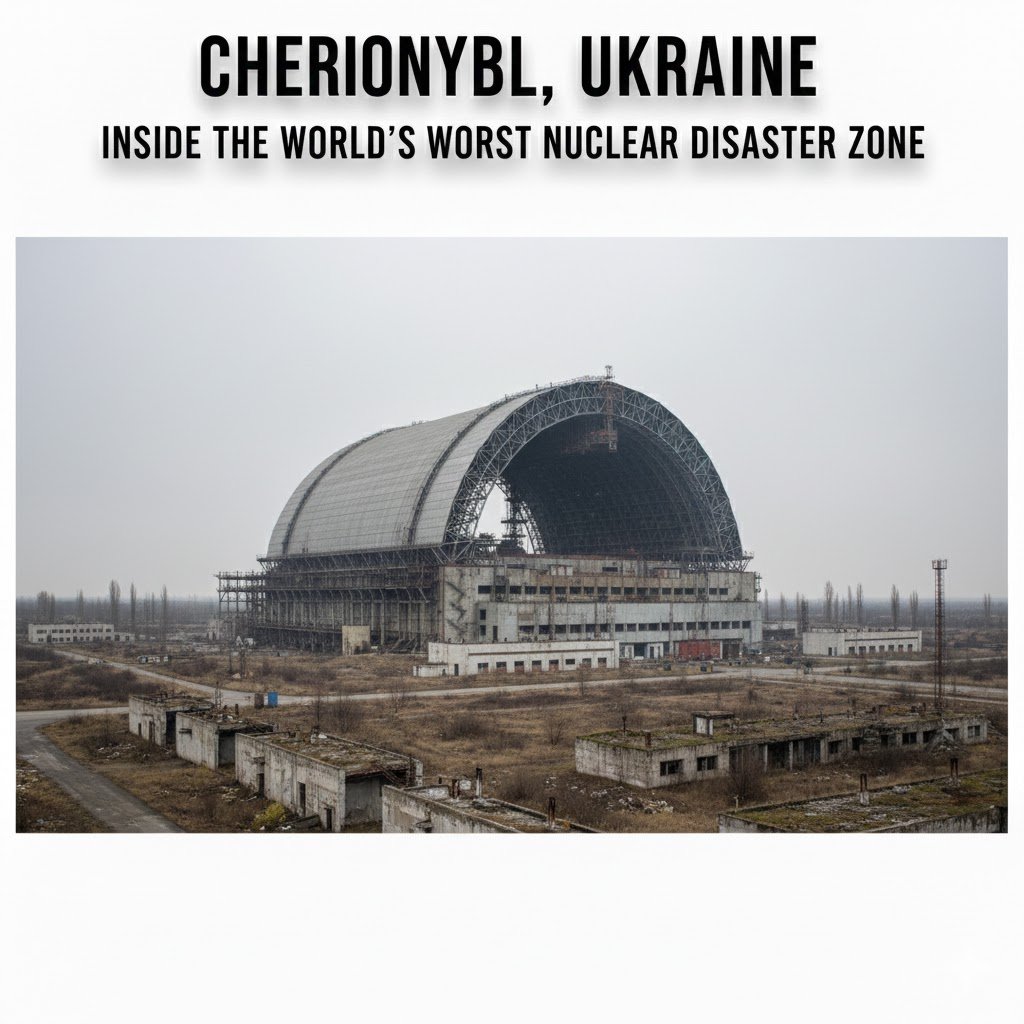
Chernobyl is one of the most infamous places in modern history. Located in northern Ukraine near the border with Belarus, it was the site of the world’s worst nuclear disaster in 1986. Today, Chernobyl stands as a haunting reminder of technological failure, human error, and the long-lasting consequences of radiation.
What was once a thriving Soviet city is now an abandoned exclusion zone, frozen in time.
What Happened at Chernobyl?
On April 26, 1986, Reactor No. 4 at the Chernobyl Nuclear Power Plant exploded during a late-night safety test. A sudden power surge triggered a series of uncontrolled reactions, leading to a massive explosion.
The explosion:
- Destroyed the reactor core
- Released large amounts of radioactive material into the atmosphere
- Spread contamination across Ukraine, Belarus, Russia, and parts of Europe
The disaster is classified as a Level 7 event on the International Nuclear Event Scale — the highest level possible.
Why Did the Explosion Occur?
The accident was caused by a combination of:
- Flawed reactor design
- Operator errors
- Inadequate safety procedures
The RBMK reactor used at Chernobyl had known design weaknesses. During the test, safety systems were disabled, and a sudden power spike led to catastrophic failure.
The resulting explosion blew the 1,000-ton reactor lid off the building, exposing radioactive fuel to the environment.
Immediate Impact of the Disaster
Two plant workers died on the night of the explosion. In the following weeks, dozens of emergency responders and firefighters died from acute radiation sickness.
Thousands of people were exposed to dangerous radiation levels.
The nearby city of Pripyat, home to nearly 50,000 residents, was evacuated 36 hours after the explosion. Residents were told they would return in a few days. Most never returned.
The Chernobyl Exclusion Zone
After the disaster, a 30-kilometer exclusion zone was established around the plant. This area remains one of the most radioactive regions in the world.
Entire towns and villages were abandoned. Buildings, schools, hospitals, and homes were left behind exactly as they were in 1986.
Nature slowly reclaimed the land. Trees grew through buildings, and wildlife returned to areas once occupied by humans.
Pripyat: The Ghost City
Pripyat is perhaps the most haunting part of Chernobyl.
Once a modern Soviet city, it featured:
- Schools
- Hospitals
- Apartment buildings
- An amusement park with a Ferris wheel
The Ferris wheel, scheduled to open just days after the disaster, never operated. Today, it stands as a symbol of sudden abandonment.
Walking through Pripyat feels like stepping back in time. Personal belongings, books, and furniture remain scattered across buildings.
The Sarcophagus and New Safe Confinement
After the explosion, Soviet authorities constructed a concrete structure known as the “sarcophagus” to contain the damaged reactor.
Over time, the original structure weakened. In 2016, a massive steel arch called the New Safe Confinement was placed over the reactor to prevent further radiation leaks.
This engineering project is one of the largest movable structures ever built.
Radiation Levels Today
Radiation levels in Chernobyl vary depending on location.
Some areas remain highly contaminated and unsafe for long-term exposure. However, guided tours operate in certain zones where radiation levels are considered manageable for short visits.
Visitors wear dosimeters to monitor exposure, and tours follow strict safety routes.
Although short-term visits are generally considered safe under controlled conditions, the area is not suitable for permanent habitation.
Environmental Impact
The explosion released radioactive isotopes such as iodine-131 and cesium-137 into the atmosphere.
The long-term effects included:
- Increased thyroid cancer cases
- Contaminated soil and water
- Long-lasting ecological changes
However, one unexpected outcome has been the return of wildlife. With human activity absent, species such as wolves, deer, and birds have flourished inside the exclusion zone.
Some scientists consider it an unintended wildlife sanctuary.
Can You Visit Chernobyl?
Yes, Chernobyl was open to guided tours before regional conflicts disrupted tourism. Visitors could enter through authorized tour companies with strict regulations.
Tours typically included:
- The reactor site (viewed from a safe distance)
- The ghost city of Pripyat
- The Duga radar installation
- Abandoned villages within the exclusion zone
Travelers had to follow safety instructions carefully and avoid touching objects or entering restricted areas.
Current travel conditions depend on political and security situations in Ukraine.
Lessons from Chernobyl
Chernobyl changed global nuclear policy. After the disaster:
- Nuclear safety standards were strengthened worldwide
- Reactor designs were improved
- International cooperation on nuclear safety increased
The accident exposed weaknesses in communication and transparency within the Soviet system.
Chernobyl remains a powerful case study in engineering, risk management, and crisis response.
Why Chernobyl Fascinates Travelers
Chernobyl attracts attention because it combines:
- Real historical tragedy
- Abandoned urban landscapes
- Scientific importance
- Human stories of sacrifice and survival
Unlike mythical or exaggerated locations, Chernobyl’s danger was real and documented.
Its silent streets and decaying buildings serve as a reminder of how quickly civilization can collapse under extreme circumstances.
Final Thoughts
Chernobyl is more than a disaster site. It is a symbol of human error, resilience, and the lasting impact of technological failure.
The abandoned city of Pripyat and the damaged reactor stand as reminders of a night that changed history forever.
For those interested in history, science, and extreme destinations, Chernobyl remains one of the most powerful and thought-provoking places on Earth.