
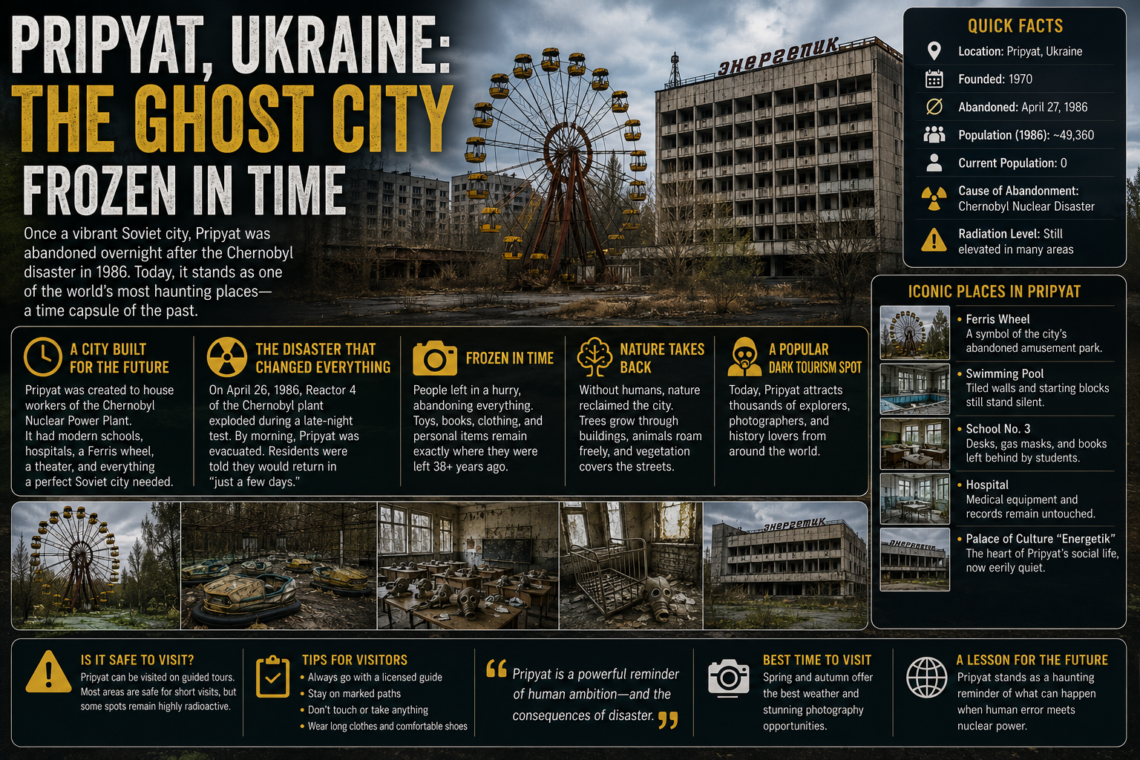
Pripyat, Ukraine, is one of the most haunting and fascinating places on Earth. Once a thriving city built to house workers at the nearby Chernobyl Nuclear Power Plant, Pripyat was evacuated almost overnight after the catastrophic explosion at Reactor No. 4 in 1986. Today, it stands as a ghost town, frozen in time, offering a glimpse into life abandoned by humans but reclaimed by nature.
Visiting Pripyat is like stepping into a real-life post-apocalyptic world, where silence, decay, and memories of a sudden disaster dominate the landscape.
Where Is Pripyat Located?
Pripyat is located in northern Ukraine, just 3 kilometers from the Chernobyl Nuclear Power Plant. The city lies within the Chernobyl Exclusion Zone, a 30-kilometer radius around the reactor where radiation levels remain high and human habitation is prohibited.
Pripyat was once home to nearly 50,000 people, mostly plant workers and their families. It was considered a model Soviet city, with schools, hospitals, apartment blocks, and recreational facilities.
The History of Pripyat
Pripyat was founded in 1970 to accommodate workers building the Chernobyl Nuclear Power Plant. The city was modern, featuring:
- Schools and kindergartens
- Hospitals and clinics
- Shops, restaurants, and sports facilities
- A cultural palace for events and theater performances
- A stadium and amusement park
Life in Pripyat was vibrant, reflecting optimism in Soviet technological progress and nuclear energy.
The Chernobyl Disaster and Evacuation
On April 26, 1986, Reactor No. 4 exploded, releasing massive amounts of radioactive material into the environment. Within 36 hours, authorities evacuated Pripyat, telling residents they would be able to return in a few days.
Most residents never returned. Personal belongings, toys, furniture, and documents were left behind. Buildings were sealed, and nature slowly began reclaiming the city.
Exploring the Ghost City
Pripyat is one of the most visited parts of the Chernobyl Exclusion Zone for guided tours. Visitors encounter:
Abandoned Buildings
Apartment complexes, schools, hospitals, and offices are left in decaying silence. Furniture, books, and household items remain where they were abandoned, creating an eerie snapshot of 1980s life.
The Amusement Park
Pripyat’s amusement park, which was scheduled to open just days after the disaster, never welcomed visitors. Its Ferris wheel, bumper cars, and carousel remain rusting symbols of lost innocence.
Schools and Hospitals
Classrooms with chalkboards still contain lesson notes. Hospital wards contain abandoned medical equipment. These buildings offer a chilling reminder of lives abruptly disrupted.
Street Signs and Vehicles
Rusting cars, bicycles, and street signs are frozen in place, overtaken by plants and trees. The quiet streets feel otherworldly, with an almost surreal sense of time standing still.
Nature Reclaims the City
Since the evacuation, Pripyat has been slowly reclaimed by nature. Trees grow through buildings, wild animals roam the streets, and birds nest in abandoned structures.
Species now thriving in the exclusion zone include:
- Wolves and foxes
- Deer and wild boar
- Birds of prey and small mammals
Ironically, the absence of humans has allowed wildlife populations to flourish, turning Pripyat into an unintended wildlife sanctuary.
Safety and Visiting Pripyat
Visiting Pripyat requires a guided tour due to lingering radiation risks. Safety precautions include:
- Dosimeters to monitor radiation exposure
- Avoiding contact with surfaces or debris
- Wearing protective clothing in certain areas
- Staying within authorized zones
Tours provide a safe way to experience the city’s haunting atmosphere while respecting environmental and safety regulations.
Why Pripyat Fascinates People
Pripyat captivates travelers and photographers for several reasons:
- Historical significance: It tells the story of the Chernobyl disaster and human error.
- Eerie beauty: Decay, rust, and overgrown structures create hauntingly photogenic scenes.
- Time capsule: The city preserves a snapshot of 1980s Soviet life.
- Human curiosity: The combination of danger and mystery draws adventurers.
The city has been featured in films, documentaries, video games, and literature, amplifying its global recognition.
Lessons from Pripyat
Pripyat serves as a stark reminder of:
- The consequences of technological failures
- The vulnerability of human settlements to disasters
- The resilience of nature when humans are absent
It encourages reflection on how humanity interacts with the environment and the importance of safety and preparedness.
Final Thoughts
Pripyat, Ukraine, is more than a ghost town — it is a window into history, a monument to human ambition and tragedy, and a testament to nature’s ability to reclaim spaces.
For travelers seeking history, extreme destinations, and haunting landscapes, Pripyat offers a rare opportunity to witness a world frozen in time.
Walking its silent streets, seeing abandoned schools, and gazing at the rusting Ferris wheel, visitors can feel the weight of a city left behind — a city that will never truly return.