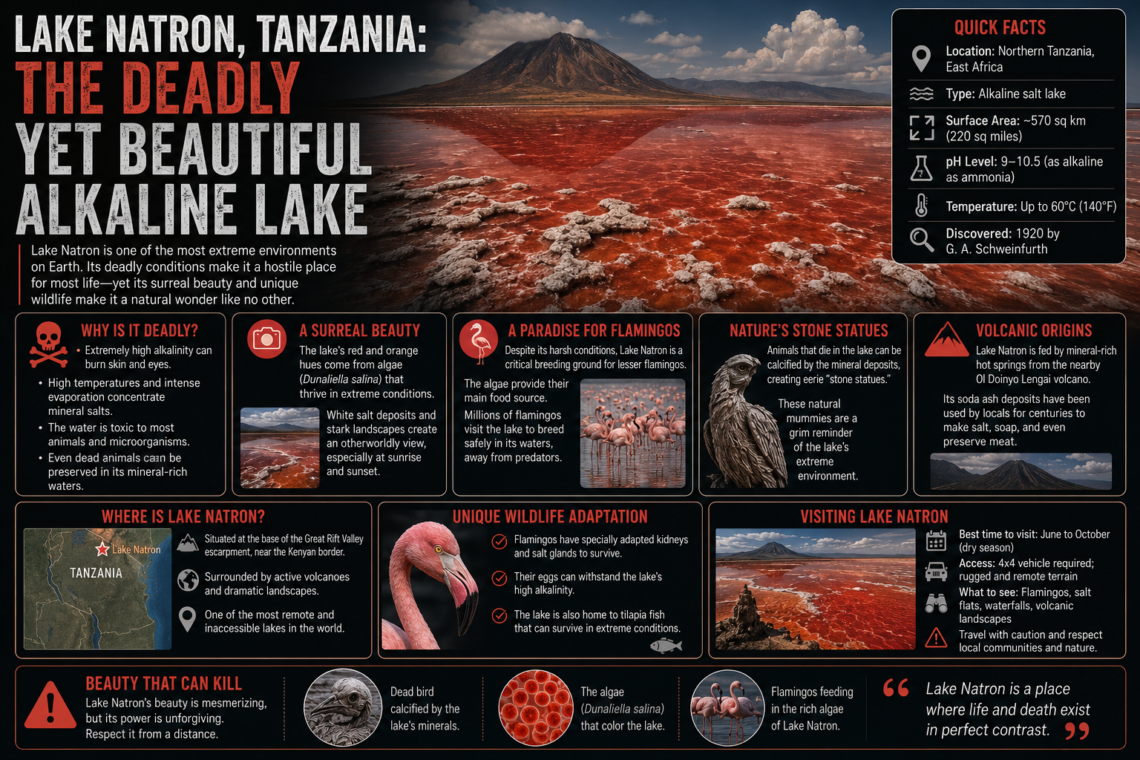
Lake Natron, located in northern Tanzania near the border with Kenya, is one of the most unusual and dangerous bodies of water on Earth. Famous for its extreme alkalinity, bright red waters, and the eerie “calcified” animals that line its shores, Lake Natron is as fascinating as it is deadly.
Despite its harsh environment, the lake is a vital habitat for wildlife, especially flamingos, and offers an unforgettable experience for adventurous travelers.
Where Is Lake Natron Located?
Lake Natron lies in the East African Rift Valley, approximately 600 meters above sea level. It is part of a chain of alkaline lakes in the region, which also includes Lakes Magadi and Bogoria in Kenya.
The lake covers about 57 square kilometers, but its size fluctuates dramatically with rainfall. During dry seasons, its edges shrink, revealing the thick, reddish salt crusts.
Why Is Lake Natron So Dangerous?
Lake Natron is extremely hostile to most life forms due to several factors:
- High alkalinity: The lake has a pH as high as 10.5, similar to ammonia.
- High temperature: In shallow areas, water temperatures can reach 60°C (140°F).
- Toxic minerals: The water contains large amounts of soda and other minerals.
These conditions make Lake Natron virtually uninhabitable for humans and most animals. Even a short swim can result in severe chemical burns.
The alkalinity is so intense that it can calcify dead animals within weeks, leaving behind eerie statues that appear petrified.
Why Does the Lake Turn Red?
The reddish color of Lake Natron comes from microorganisms and algae that thrive in the alkaline water. These tiny life forms produce pigments that give the lake its blood-red appearance.
The red hue intensifies during the dry season when water levels drop and salt concentrations increase.
From a distance, the lake can appear both beautiful and menacing, like a natural warning sign.
The Calcified Creatures of Lake Natron
One of Lake Natron’s most haunting features is its calcified animals. Birds, bats, and small mammals that accidentally fall into the lake can become covered in soda and salt. Over time, their bodies harden and are preserved almost perfectly.
Photographers have captured striking images of these “stone animals,” making the lake both infamous and mesmerizing.
While unsettling, these natural occurrences highlight the extreme and unique ecosystem of the lake.
Wildlife That Thrives Here
Despite its harsh conditions, Lake Natron is a critical breeding ground for one of the world’s largest populations of lesser flamingos.
Flamingos
- Every year, up to 2 million flamingos migrate here to breed.
- The birds lay eggs on small islands made of hardened soda and salt.
- The lake’s toxicity protects the birds from predators.
Other wildlife, such as fish adapted to alkaline conditions, insects, and certain microorganisms, also survive in this extreme habitat.
Geological and Environmental Significance
Lake Natron was formed by volcanic activity in the Rift Valley, which created the alkaline minerals that dominate the water today.
The lake is also an important stopover for migratory birds and plays a key role in the local ecosystem. Conservationists emphasize protecting Lake Natron from human interference and pollution.
Can You Visit Lake Natron?
Yes, travelers can visit Lake Natron, but it is not easy to reach. The lake is remote, and the surrounding region has limited infrastructure.
Visitors often need:
- Off-road vehicles
- Local guides familiar with desert and volcanic terrain
- Protective clothing and sun gear
The best time to visit is during the dry season when the lake’s red colors are most vivid.
Swimming in the lake is not recommended due to its high alkalinity, but observing the flamingos and photographing the dramatic landscapes is safe and rewarding.
Why Lake Natron Fascinates Travelers
Lake Natron’s combination of danger, color, and wildlife makes it one of the most visually striking places on Earth.
It represents:
- Extreme natural conditions
- Rare wildlife habitats
- A glimpse into survival in a harsh environment
- Unique photographic opportunities
Few places on Earth are both deadly and breathtaking at the same time.
The Challenge of Nature
Lake Natron reminds us that nature can be both beautiful and unforgiving. While humans must exercise caution, the lake thrives as a vital and resilient ecosystem.
Its unique chemical composition demonstrates how life can adapt to extreme conditions and continue to flourish against the odds.
Final Thoughts
Lake Natron, Tanzania, is a place of surreal landscapes and extreme conditions. Its red waters, alkaline toxicity, and calcified creatures make it one of the most fascinating and dangerous lakes in the world.
For travelers seeking adventure, wildlife photography, or simply a glimpse into one of the planet’s harshest ecosystems, Lake Natron offers an unforgettable experience.
It is a vivid reminder of how beauty and danger can exist side by side in nature.