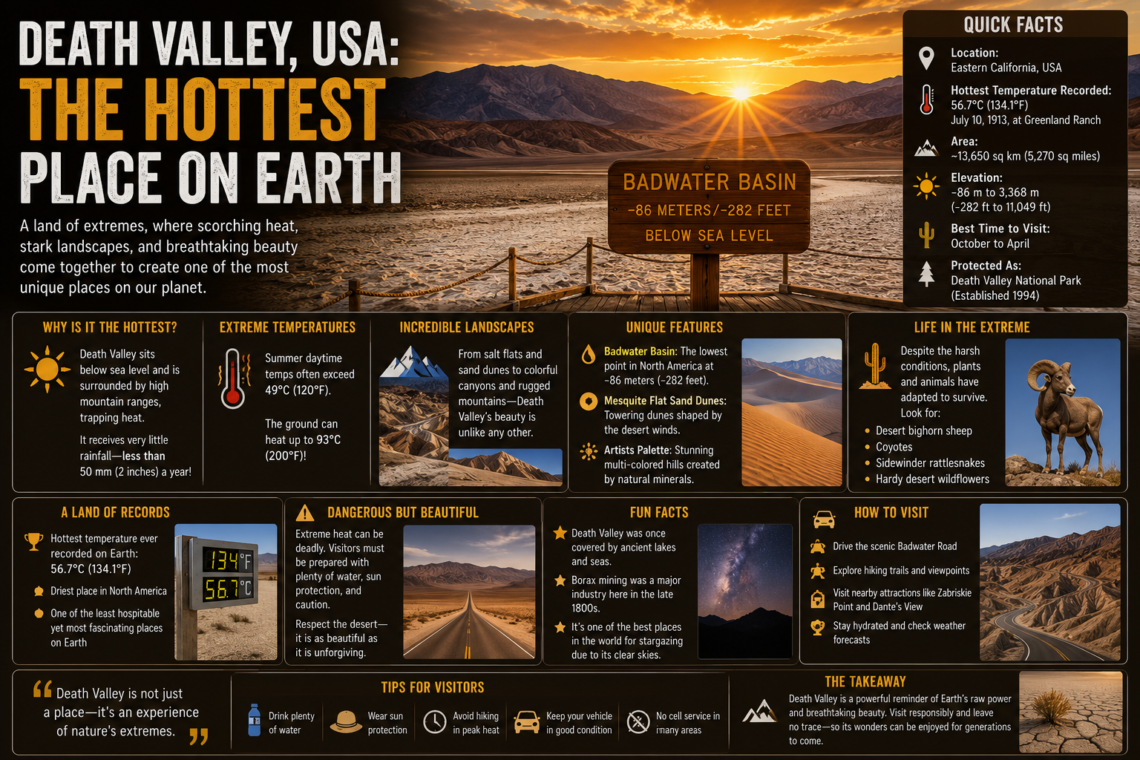
Death Valley is one of the most extreme environments on the planet. Located in eastern California near the Nevada border, this vast desert landscape holds the record for the highest air temperature ever recorded on Earth. With its scorching heat, dry climate, and dramatic terrain, Death Valley is both breathtaking and dangerous.
Despite its intimidating name, thousands of visitors travel here each year to experience its unique beauty.
Where Is Death Valley Located?
Death Valley lies within the Mojave Desert in the western United States. It stretches across approximately 3,000 square miles and is part of Death Valley National Park, one of the largest national parks in North America.
The valley sits below sea level and is surrounded by high mountain ranges, which trap heat and create extreme temperatures.
Why Is Death Valley So Hot?
Death Valley’s extreme heat is caused by several geographic factors:
- It lies below sea level, with Badwater Basin sitting at 282 feet below sea level.
- Surrounding mountains trap hot air inside the valley.
- The dry desert air prevents heat from escaping easily.
- Clear skies allow intense sunlight to directly heat the ground.
On July 10, 1913, Furnace Creek recorded a temperature of 56.7°C (134°F), widely recognized as the highest air temperature ever measured on Earth.
Summer temperatures regularly exceed 45°C (113°F), making it one of the harshest climates for human survival.
The Meaning Behind the Name
Death Valley earned its name during the California Gold Rush in 1849. A group of pioneers attempting to cross the valley became trapped. Although most survived, one member reportedly died.
As they finally escaped, a woman in the group is said to have turned back and said, “Goodbye, Death Valley,” giving the region its famous name.
Is Death Valley Dangerous?
Yes, Death Valley can be extremely dangerous, especially during summer.
The primary risks include:
- Severe dehydration
- Heat exhaustion
- Heatstroke
- Vehicle breakdowns in remote areas
Each year, emergency rescues are conducted for visitors who underestimate the heat.
However, with proper planning and precautions, it is possible to explore the park safely.
Unique Landscapes of Death Valley
Despite its harsh climate, Death Valley is one of the most visually stunning desert landscapes in the world.
Badwater Basin
The lowest point in North America, Badwater Basin is covered in white salt flats that stretch across the desert floor. The geometric salt patterns create a surreal appearance.
Mesquite Flat Sand Dunes
These golden sand dunes offer classic desert scenery and are popular for photography, especially at sunrise and sunset.
Zabriskie Point
A famous viewpoint known for its colorful, eroded hills shaped by millions of years of geological activity.
Artist’s Palette
A hillside displaying vibrant colors caused by mineral deposits, including iron and manganese.
Dante’s View
From this high vantage point, visitors can look down at the entire valley floor, including Badwater Basin.
Wildlife in Extreme Conditions
Although it appears lifeless, Death Valley supports a surprising range of wildlife.
Animals that survive here include:
- Desert bighorn sheep
- Coyotes
- Lizards and snakes
- Various bird species
These animals have adapted to extreme temperatures by being active at night or seeking shelter during the hottest hours.
Even certain plants manage to survive with minimal water.
The Rare Super Bloom
In rare years when rainfall conditions are ideal, Death Valley experiences a “super bloom.” During this phenomenon, wildflowers cover parts of the desert floor in bright colors.
This transformation turns the normally dry landscape into a temporary sea of flowers, attracting photographers and nature lovers from around the world.
Super blooms are unpredictable and may occur only once every several years.
Visiting Death Valley Safely
The best time to visit Death Valley is between November and March, when temperatures are mild and comfortable.
Visitors are advised to:
- Carry plenty of water
- Avoid hiking during midday heat
- Keep vehicles in good condition
- Inform someone of travel plans in remote areas
Cell service is limited in many parts of the park.
With proper preparation, Death Valley can be explored safely and responsibly.
Why Death Valley Fascinates Travelers
Death Valley represents extremes. It holds records for heat, elevation, and dryness in North America.
Travelers are drawn to:
- Its dramatic desert scenery
- Its geological formations
- The thrill of visiting one of the hottest places on Earth
- Its peaceful, remote atmosphere
Unlike places that are dangerous due to conflict or wildlife, Death Valley’s challenge comes from nature itself.
It demonstrates how life adapts to the harshest environments.
The Contrast of Beauty and Danger
What makes Death Valley unique is the contrast between beauty and danger.
From glowing sunsets over sand dunes to vast salt flats shimmering under the sun, the landscape feels almost alien. Yet beneath this beauty lies one of the most unforgiving climates on the planet.
The valley serves as a reminder of nature’s power and the importance of respecting extreme environments.
Final Thoughts
Death Valley, USA, is one of the most extraordinary and extreme destinations in the world. Known as the hottest place on Earth, it challenges human limits while offering unforgettable scenery.
Though dangerous in summer, it remains a popular destination for travelers who prepare carefully.
Death Valley proves that even in the harshest conditions, nature can create landscapes of remarkable beauty.